
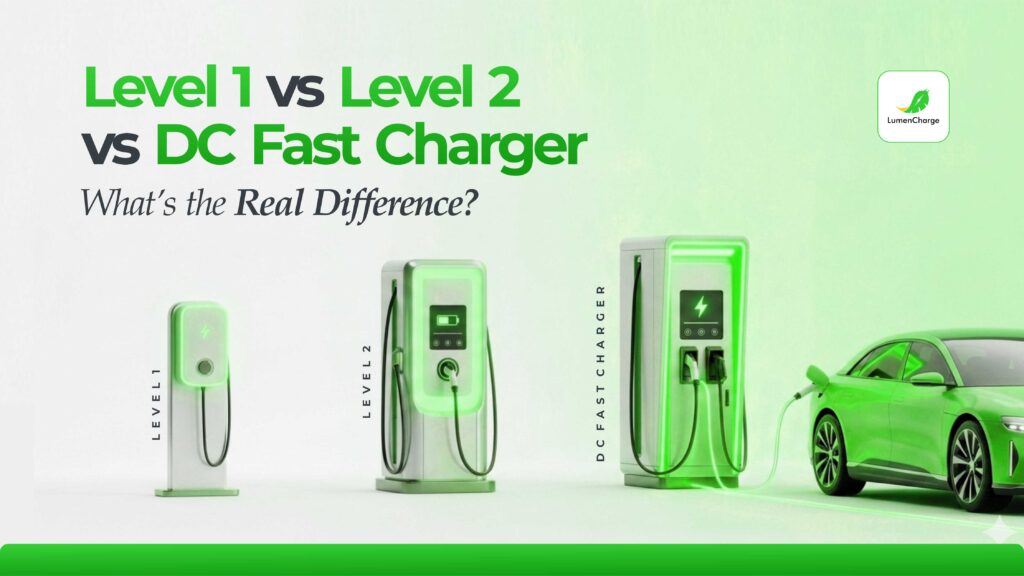
Introduction: Understanding the Types of EV Chargers in Nigeria
Electric vehicles are steadily transforming transportation across Nigeria. From Lagos to Abuja, more drivers, businesses, and fleet operators are embracing cleaner mobility solutions. But as EV adoption increases, one important question keeps coming up: Which charger should I use?
Understanding the Types of EV Chargers in Nigeria is no longer optional — it is essential. The type of charger you choose directly affects how fast your vehicle powers up, how much you spend on electricity, your installation costs, and even the long-term health of your battery.
Many new EV owners find themselves confused by terms like Level 1, Level 2, and DC Fast Charging. Are they simply different speeds? Do they require special infrastructure? Which one makes the most sense for Nigerian homes, commercial buildings, or high-traffic public locations?
The reality is simple: not all EV chargers are the same. Each charging level serves a different purpose, from basic overnight home charging to rapid commercial-grade charging designed for fleets and highways.
In this guide, we break down the three major, Types of EV Chargers in Nigeria — Level 1, Level 2, and DC Fast Charging, explaining how they work, how fast they charge, their installation requirements, and which solution best fits your home, business, or fleet operations.
If you are planning to install a charger, invest in EV infrastructure, or simply want to make smarter energy decisions, this guide will help you choose confidently.
What Are the 3 Types of EV Chargers?
There are three standard EV charging levels:
- Level 1 Charging
- Level 2 Charging
- DC Fast Charging (Level 3)
They differ by voltage, speed, infrastructure cost, and ideal use case.
Level 1 Charging (Basic Home Charging)
Level 1 charging operates on 120V AC power and delivers approximately 5–8 kilometers of driving range per hour, meaning a full charge can take anywhere from 12 to 24 hours or more, depending on your vehicle’s battery size.
It uses a standard household wall outlet, so no special installation or additional equipment is required — simply plug in and charge. This makes it a convenient and cost-effective option for low-mileage EV drivers, overnight home charging, or as a backup solution when faster chargers are unavailable.
The main advantages of Level 1 charging include zero installation cost, simple plug-and-play setup, and reliability for emergency use. However, it is significantly slower than other charging levels, making it impractical for drivers who travel long distances daily or for commercial applications.
In Nigeria, Level 1 charging is best suited for EV owners who drive less than 50 kilometers per day and can leave their vehicles plugged in overnight.
Level 2 Charging (Recommended for Homes & Businesses)
Level 2 charging operates on 240V AC power and delivers between 30 and 100 kilometers of driving range per hour, allowing most electric vehicles to reach a full charge within 4 to 8 hours.
This makes it the most common EV charging solution globally and the most practical option for Nigerian homes, offices, and commercial properties. Because of its faster charging speed — typically 5 to 7 times quicker than Level 1 — Level 2 charging is ideal for residential installations, apartment complexes, office buildings, ride-hailing drivers, delivery fleets, and other commercial operations that require reliable daily charging.
It provides the perfect balance between speed, efficiency, and long-term cost savings, especially for drivers who need consistent overnight charging. While Level 2 chargers require professional installation and a higher upfront hardware investment, they are compatible with most electric vehicles and offer significantly better performance for regular use.
For most EV owners in Nigeria, Level 2 charging represents the best combination of affordability, convenience, and efficiency. With LumenCharge, customers can access professional residential EV charger installation, load capacity assessment, and smart energy monitoring through a dedicated mobile app, ensuring a seamless and optimized charging experience.
DC Fast Charging (Level 3 – Commercial Grade)
DC Fast Charging, also known as Level 3 charging, is the fastest and most powerful EV charging solution available in Nigeria. Operating on 400V to 900V DC power, it can charge an electric vehicle up to 80% in just 20 to 45 minutes, making it ideal for drivers who need rapid turnaround times. Unlike Level 1 and Level 2 chargers, DC Fast Charging is designed primarily for public charging stations, highways, high-traffic commercial areas, taxi hubs, logistics fleets, and inter-state travel routes where minimizing downtime is critical.
Its major advantage is speed, it significantly reduces waiting time and keeps commercial vehicles moving efficiently, which is essential for fleet operations and revenue-based transport services. However, the infrastructure required to install DC Fast Chargers is expensive and demands higher electricity capacity, making it more suitable for large-scale or commercial investments.
Additionally, frequent reliance on DC Fast Charging may impact long-term battery health, so it is best used strategically rather than as a daily primary charging method. For businesses and public charging investors in Nigeria, DC Fast Charging offers the ultimate solution for speed, convenience, and operational efficiency.
EV Charger Comparison Table
| Feature | Level 1 | Level 2 | DC Fast |
| Voltage | 120V AC | 240V AC | 400–900V DC |
| Speed | 5–8 km/hr | 30–100 km/hr | 80% in 30 mins |
| Installation | None | Required | Complex infrastructure |
| Best For | Light home use | Home & commercial | Public & fleet |
Which EV Charger Should You Choose in Nigeria?
For Homeowners:
Level 2 offers faster overnight charging and long-term savings.
For Businesses:
Level 2 is ideal for office or apartment installations.
For Fleet Operators:
DC Fast Charging reduces downtime and increases operational efficiency.
For Public Charging Investors:
Highway-based DC Fast Charging ensures maximum turnover.
How LumenCharge Simplifies EV Charging in Nigeria
With the LumenCharge platform, you can:
- Locate nearby EV charging stations in Nigeria
- Track charging sessions
- Monitor battery performance
- Schedule EV charger installation
- Access smart charging analytics
- Manage multiple vehicles (fleet dashboard)
Whether you are new to EVs or managing a commercial fleet, LumenCharge centralizes your charging experience.
Conclusion
Choosing the right EV charger depends on your driving pattern, location, and charging frequency.
- Light drivers → Level 1
- Most homeowners → Level 2
- Businesses & fleets → DC Fast
As EV adoption grows in Nigeria, installing the right charging solution now positions you ahead of the curve.
Ready to power your EV smarter?
Visit LumenCharge to explore charging solutions, installation services, and smart management tools.